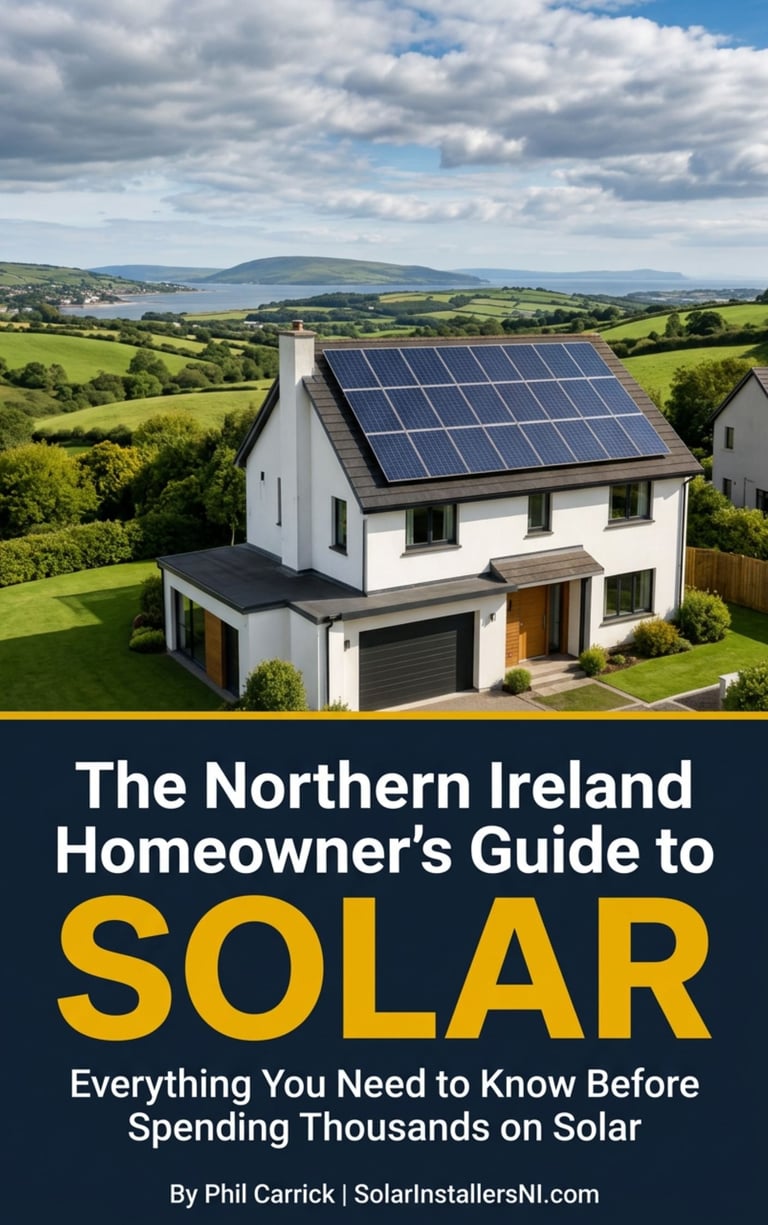
Before You Spend £8,000–£15,000 On Solar, Read This First
Thinking about solar panels? You're not alone. With electricity prices rising and more homeowners looking for ways to reduce their energy bills, solar is becoming increasingly popular across Northern Ireland.
But here's the truth. Most homeowners know very little about solar before they start researching. And that's completely normal.
In fact, after reviewing renewable companies, installer websites and customer reviews across the UK, I've noticed that many businesses focus on getting you to request a quote rather than helping you understand how solar actually works.
This guide is different. My goal is simple:
To help you become an informed buyer before speaking to an installer. No jargon. No pressure. No sales pitch. Just practical information that will help you understand your options, avoid common mistakes and feel more confident when the time comes to request quotes.
Whether you're looking to reduce your electricity bills, add battery storage or simply find out whether solar is right for your home, this guide will help you make a more informed decision.
Let's start with the things I wish somebody had told me before I started researching solar.
After researching solar companies, speaking to homeowners and reviewing countless installer websites, these are the things that come up again and again.
I genuinely thought solar panels only worked properly on sunny days.
They don't.
Solar panels generate electricity from daylight, not direct sunshine.
Yes, you'll generate more electricity on a bright summer day than on a wet winter afternoon, but modern solar panels continue producing electricity throughout the year.
If solar only worked in sunny climates, countries like Germany wouldn't have millions of solar panels installed.
This one surprised me.
Most homeowners spend weeks comparing panel brands. Very few spend time comparing installers.
The reality is that a quality installation, good system design and reliable aftercare are often more important than choosing between two similar panel brands.
A good installer can make an average system perform brilliantly.
A poor installer can turn a great system into a headache.
When people start researching solar, they often assume: "More panels = more savings."
Not necessarily.
A good solar system should be designed around how your household actually uses electricity.
Sometimes a slightly smaller, well-designed system can provide better value than the largest system that will fit on your roof.
Many people assume that solar and batteries automatically go together.
They don't.
You can absolutely install solar panels without battery storage. A battery simply allows you to store excess electricity generated during the day and use it later.
For some households, batteries make perfect sense.
For others, the additional cost may not deliver the return they're expecting.
It's natural to compare prices. But solar isn't like buying a kettle from Amazon.
A quote that's £1,500 cheaper may not include the same warranties, support, monitoring or installation quality.
Always look beyond the headline price.
For years, people believed solar only worked on south-facing roofs.
Modern systems are much more flexible. Many east and west-facing roofs perform extremely well and can still generate significant savings.
Don't assume your roof isn't suitable until you've had a proper assessment.
This was a real lightbulb moment for me.
Most homeowners focus on how much electricity their panels will generate.
The more important question is: How much electricity can you avoid buying from your supplier?
That's where the real savings come from. The more of your own electricity you use, the more money you keep in your pocket.
Not just the rating. Read the reviews.
Then read how the company responds to them. Do they reply? Do they care? Do they handle problems professionally?
You'll often learn more from review responses than from the website itself.
Solar isn't usually about saving money next month. It's about reducing energy costs over many years.
Thinking long-term helps you make better decisions and avoid focusing solely on upfront costs.
A good installer won't be annoyed by questions. In fact, they'll welcome them.
Solar is a significant investment and you should feel comfortable asking about costs, warranties, batteries, expected savings and aftercare.
If someone is pressuring you to make a quick decision, that's usually a warning sign.
Take your time. Ask questions.
And don't be afraid to walk away if something doesn't feel right.
"Sure we don't get enough sun."
If you're from Northern Ireland, you've probably heard that more than once. You may have even said it yourself. It's one of the biggest reasons some homeowners dismiss solar before they've properly looked into it.
The reality is very different.
Solar panels don't generate electricity from heat.
They generate electricity from daylight.
That's an important distinction.
Even on cloudy days, solar panels continue producing electricity. Yes, output will be higher on bright summer days than on dark winter afternoons, but modern solar systems work throughout the year.
In fact, many homeowners are surprised by just how much electricity they generate during spring and autumn.
It certainly feels that way sometimes!
However, Northern Ireland receives enough daylight throughout the year for solar to make financial sense for many households.
One of the most surprising facts is that countries like Germany have installed millions of solar systems despite having similar levels of solar radiation to parts of the UK and Ireland.
If solar didn't work in Northern Ireland, it wouldn't work in large parts of Europe either.
Another common concern is: "What happens during winter?"
Naturally, solar panels generate less electricity during the shorter days of winter. That's perfectly normal.
However, they don't stop working. Many homeowners continue generating useful amounts of electricity even during the colder months.
It's also worth remembering that the majority of a solar system's annual generation happens between March and September. Those brighter months help offset the quieter winter period.
The real question is: "Will Solar Work For My Home?"
That's where things become more personal. Factors such as:
all play a part in determining how much value you'll get from a solar system. That's why two neighbours can have very different results even if they live on the same street.
Many homeowners assume their roof isn't suitable. Others assume Northern Ireland isn't sunny enough.
The only way to know for certain is to get a professional assessment and understand the numbers.
You might be pleasantly surprised.
And even if solar isn't right for your home today, you'll be making that decision based on facts rather than assumptions. That's always a better place to start.
Let's be honest. This is probably the reason you're reading this guide. Not because you're fascinated by solar panels. Not because you've always wanted a battery. But because you're wondering:
"Will this actually save me money?"
The honest answer is:
It depends.
I know that's not the exciting answer you were hoping for, but it's the truth. Every home is different. Every family uses electricity differently. And that's why no installer can accurately tell you your exact savings without first understanding your situation.
Most people focus on:
"How much electricity will my solar panels generate?"
The better question is:
"How much electricity will I avoid buying from my supplier?"
That's where the savings come from.
If your solar panels generate electricity while you're using appliances in your home, you're effectively using your own electricity instead of buying it. That's the magic.
Imagine two identical houses side by side. Both have exactly the same solar system.
↑ Higher self-consumption
↓ Lower self-consumption
The first house will usually benefit more because they're using more of their solar electricity as it's being generated. Same roof. Same panels. Different results.
This is where battery storage becomes interesting.
Your solar panels generate electricity during the day. Anything you don't use is typically exported.
Some of that excess electricity can be stored and used later in the evening. For many families, that's when electricity usage is highest — cooking dinner, watching television, charging devices, running appliances.
That's why batteries can improve self-consumption and potentially increase savings.
Let's imagine a typical family home in Northern Ireland with an annual electricity bill of approximately £1,500. A properly designed solar system could significantly reduce the amount of electricity that needs to be purchased from the grid. Add battery storage and those savings may increase further.
The exact figures depend on your property, usage habits and system design. That's why any installer promising huge savings without asking questions should raise an eyebrow.
If somebody tells you: "You'll never pay an electricity bill again." — be cautious.
Good installers set realistic expectations. Great installers explain both the benefits and the limitations.
Solar can absolutely reduce electricity costs. But it's not a magic money-printing machine. The homeowners who are happiest with their solar systems tend to be the ones who went into the process with realistic expectations.
The easiest starting point is your electricity bill. If you know roughly what you're spending each month, it's much easier to estimate whether solar is likely to make sense for your home.
That's exactly why we've created our Solar Savings Calculator. It takes less than a minute and can help you understand the potential savings before requesting quotes from installers.
Remember: The goal isn't to eliminate every electricity bill. The goal is to buy less electricity from your supplier and keep more money in your own pocket.
This is usually the second question homeowners ask. The first is: "How much will I save?" The second is: "How much is this going to cost me?" And that's a fair question. After all, solar isn't a small purchase. For most homeowners, it's one of the biggest investments they'll make in their property.
Solar systems vary enormously. The final cost depends on:
This means there isn't a one-size-fits-all price. However, rough guides can still be useful.
As a very rough guide:
Suitable for smaller homes, lower electricity usage
£4,000 – £6,000
Suitable for average family homes, higher daytime usage
£6,000 – £10,000
Suitable for higher electricity usage, greater energy independence
£10,000 – £15,000+
Remember: These are only examples. Every property is different.
This catches many homeowners out. Two quotes can appear to be for "the same thing" but be completely different.
One installer might include premium panels, a better inverter, longer warranties, battery storage, monitoring software and higher quality installation. Another may not.
That's why comparing quotes purely on price can be misleading. It's a bit like comparing two cars because they're both blue. The details matter.
Most homeowners naturally want a good deal. Nothing wrong with that. But solar is a long-term investment.
A system that's £1,000 cheaper today might not look like such a bargain if warranties are weaker, components are lower quality, customer support is poor or installation standards aren't as high.
The goal isn't to find the cheapest system. The goal is to find the best value.
Many installers now offer finance options. This can help spread the cost over several years.
If you're considering finance, make sure you understand monthly repayments, interest charges, total repayment amount and early settlement options. Always compare the total cost, not just the monthly payment.
This is another common question. The truth is that nobody knows exactly what future prices will do. Technology improves. Equipment costs change. Energy prices change. Government policies change.
Most homeowners are better off making a decision based on today's numbers rather than trying to predict the future.
When speaking to installers, don't just ask "How much does it cost?" Also ask:
Those answers often tell you more than the number at the bottom of the quote. A good installer should be able to explain their recommendation clearly and confidently. If they can't, keep asking questions.
If solar panels are the thing everyone talks about, solar batteries are the thing everyone asks about. And it's easy to see why. The idea sounds brilliant. Generate electricity during the day. Store what you don't use. Use it later when you need it. Simple.
But before spending thousands of pounds on battery storage, it's important to understand what batteries actually do and whether they're likely to benefit your household.
Think of a solar battery like a giant rechargeable battery for your home. During the day, your solar panels generate electricity. Your home uses what it needs first. If there's any electricity left over, a battery can store it. Later in the evening, when the sun has gone down, your home can use the stored electricity instead of buying electricity from the grid. That's the basic idea.
There are usually three main reasons.
Many homeowners want to use more of the electricity they generate. Instead of exporting unused electricity, they store it for later use.
Some people simply like the idea of relying less on energy suppliers. A battery allows you to use more of your own generated electricity.
Many homeowners believe energy prices will continue to rise over time. A battery can help reduce exposure to those future increases.
This might surprise you.
Not everybody needs a battery.
In fact, some homeowners may achieve excellent results from solar panels alone.
The right answer depends on your electricity usage, your budget, when you're at home, and your long-term goals. A battery can be fantastic. But it isn't automatically the best investment for every household.
This is very similar to solar panels. Many people assume "Bigger battery = better." Not necessarily. An oversized battery can sometimes cost more than the additional savings it generates. The goal is to match the battery to your household's actual usage patterns. A good installer should discuss this with you.
Most households use the majority of their electricity before work, after work and in the evening. Unfortunately, that's often when solar generation is lowest.
That's why batteries have become so popular. They allow you to shift some of your daytime solar generation into the evening.
This is one of the most common misunderstandings. Many homeowners assume "I've got a battery, so I'll have electricity during a power cut."
Not necessarily.
Most standard solar battery systems automatically switch off during a power outage for safety reasons. Some systems can provide backup power functionality, but not all do. If backup power is important to you, ask your installer specifically about this.
Most modern battery systems come with warranties ranging from around 10 years and beyond. However, battery technology continues to improve rapidly. As with solar panels, quality, warranty terms and manufacturer reputation all matter.
Yes.
Maybe not.
The answer depends entirely on your circumstances. A good installer should be able to explain how much electricity you currently use, how much you could store, how much a battery may save and how long it could take to recover the investment.
If somebody simply says "You need a battery" without explaining why — ask more questions.
A battery isn't about generating more electricity. It's about making better use of the electricity your solar panels already produce.
For many households, that's extremely attractive. For others, the money may be better spent elsewhere.
The key is understanding your own situation and making a decision based on facts rather than assumptions. Because when it comes to batteries, one size definitely doesn't fit all.
Choosing the right installer is arguably more important than choosing the right solar panel. That might sound strange. After all, most homeowners spend hours researching panels, batteries and savings.
But the truth is this: a quality installation can provide reliable performance for decades. A poor installation can lead to years of frustration. That's why it's worth taking your time when choosing who to trust.
One of the biggest green flags is curiosity. A good installer should want to understand:
If the first conversation is all about selling rather than understanding, that's worth paying attention to.
This is a big one. Solar is a significant investment. You should never feel rushed.
Be cautious if you hear things like:
A reputable installer understands that homeowners need time to make informed decisions.
Most people look at the number of stars. That's useful. But don't stop there. Read the reviews. Look for patterns. Do customers mention good communication, professional installation, clean workmanship and helpful aftercare?
Also pay attention to how the company responds to reviews. That often tells you a lot about how they treat customers.
Not all warranties are the same. Ask questions such as:
What warranty comes with the panels?
What warranty comes with the inverter?
What warranty comes with the battery?
What workmanship warranty do you provide?
A good installer should be happy to explain the differences.
Most reputable installers are proud of their work. Ask if they can show previous projects, customer testimonials, case studies and installation photos. Seeing real-world examples can give you confidence in your decision.
This is one of the simplest ways to make a better decision. Getting multiple quotes helps you compare recommendations, equipment, pricing and professionalism. Sometimes the most valuable thing isn't the cheapest quote — it's the conversation that gives you confidence.
Any one of these doesn't automatically mean a company is bad. But if several appear together, proceed carefully.
This might sound simplistic, but it's important. If something feels off, pay attention. If a company is difficult to deal with before you've become a customer, it's unlikely they'll become easier afterwards.
The best installers don't just provide good equipment. They provide confidence. And that's often what homeowners remember most long after the installation has been completed.
A solar system might last 20 years or more. Choosing the right installer is one of the most important decisions you'll make during that process.
Take your time. Ask questions. Compare options.
And remember: the cheapest quote isn't always the best value. The best installer is usually the one who helps you understand the decision rather than simply trying to sell you something.
Not all solar quotes are created equal. And one of the biggest mistakes homeowners make is comparing quotes based purely on the final price.
Imagine receiving two quotes:
Quote A
£8,500
Quote B
£10,000
Most people immediately think: "Well, Quote A is cheaper."
But what if Quote B includes:
Suddenly it's not such a simple comparison.
That's why it's important to understand what a good solar quote should actually contain.
You shouldn't need to be an engineer to understand a solar proposal. A reputable installer should clearly explain what they're recommending, why they're recommending it, and what benefits you can reasonably expect.
If a quote is full of jargon and technical terms with little explanation, ask questions.
A quality quote should tell you exactly what you're buying.
The inverter is often described as the "brains" of the system because it converts electricity generated by the panels into electricity your home can use.
Not all batteries are the same. Make sure you understand what's being recommended and why.
A good quote should provide an estimate of how much electricity the system is expected to generate annually. This estimate will never be perfect. Weather changes. Usage changes. Life changes. But it provides a useful starting point.
Again, estimates are exactly that. Estimates. Be cautious of any company making huge promises. A reputable installer should explain how savings have been calculated, any assumptions used, and what factors could affect the outcome.
One of the first questions homeowners should ask is: "What happens if something goes wrong?"
Panel warranty
Inverter warranty
Battery warranty
Workmanship warranty
If you can't easily find this information, ask for clarification.
A proper quote should explain what's included — installation, scaffolding, electrical work, commissioning and certification. The fewer surprises later, the better.
Many modern systems include monitoring software or smartphone apps. These allow you to track electricity generation, battery usage and energy consumption.
It's worth asking: "Will I be able to monitor my system?" Most homeowners enjoy seeing exactly how their system is performing.
Before making a decision, consider asking:
A good installer should welcome these questions.
This is worth mentioning again. If somebody is pressuring you to sign immediately because "The offer ends tonight" — be cautious.
Solar is a major investment. You deserve time to think about it. A reputable installer should give you the information you need to make an informed decision.
A good solar quote shouldn't just tell you what it costs. It should help you understand what you're buying, why it's been recommended, and what you can realistically expect.
The best installers don't just provide prices. They provide clarity. And clarity leads to confidence.
That's exactly what you should be looking for before making a decision.
By the time most people request solar quotes, they've usually asked about cost, savings, panels and batteries. Those are important. But there are several questions that often get overlooked. And ironically, they're often the questions that matter most a few years after installation.
This sounds obvious. But many homeowners never ask it.
If you have a question in two years' time, who do you call? The installer? The manufacturer? The finance company?
A good installer should explain exactly how support works after installation.
Another important question. Many homeowners assume: "It's covered by warranty."
But whose warranty? The panel manufacturer? The battery manufacturer? The installer?
Understanding who is responsible for what can save confusion later.
Many modern solar systems include an app that allows you to see electricity generation, battery levels and energy usage.
This can be incredibly useful. Some homeowners become slightly obsessed with checking it!
Ask your installer what monitoring is included and whether there are any ongoing costs.
Most people don't think about this. But circumstances change.
Ask: Does solar add value to my property? What happens to any finance agreement? Can warranties transfer to a new owner?
Knowing the answers now can help avoid surprises later.
One of the biggest myths about solar is that it's maintenance-free. Solar systems are generally very low maintenance.
However, it's worth asking: Does anything need servicing? How often should the system be checked? Do the panels need cleaning?
A good installer should explain what to expect.
This catches many homeowners by surprise. Having solar panels doesn't automatically mean you'll have electricity during a power cut.
Many systems shut down automatically for safety reasons. If backup power is important to you, discuss this with your installer before making a decision.
It's a simple question. But it's worth asking.
You'll want to know installation timescales, scaffolding arrangements, what access is required, and whether you'll need to be at home. The more you understand upfront, the smoother the process tends to be.
This might be the most important question of all.
A good installer shouldn't just tell you "This is the system you need." They should explain why they've chosen it, how it suits your home, how it suits your usage and what alternatives were considered.
If somebody can clearly explain their recommendation, that's usually a very good sign.
Here's the thing. Most homeowners only buy solar once. You're not expected to know everything.
A reputable installer understands that. The best installers are often the ones who make complex topics feel simple.
Ask questions. Take notes. And don't be embarrassed if you need something explained twice.
A good installer would much rather answer your questions before installation than deal with misunderstandings afterwards.
Solar is a significant investment. The more questions you ask, the more confident you'll feel. And confidence is often the best sign that you're making the right decision.
Remember: you're not just buying solar panels. You're choosing a company you'll trust with your home.
Most solar installations go smoothly. Most installers are professional. Most homeowners end up happy with their decision. However, like any industry, there are a few warning signs worth paying attention to. Spotting these early can save a lot of stress later.
Let's start with the obvious one. If somebody is pressuring you to make a decision immediately, take a step back.
You might hear things like: "This price is only available today." "You need to sign now." "The discount disappears tomorrow."
Solar is a significant investment. A reputable installer should give you time to think, ask questions and compare options. Pressure selling is rarely a good sign.
We've all heard the saying: if it sounds too good to be true, it probably is. That doesn't mean the cheapest installer is automatically a bad choice. But it does mean you should understand why one quote is significantly lower than the others.
Ask: What's included? What's excluded? Are the warranties the same? Is battery storage included? What panels are being used?
A good installer should be able to explain the difference clearly.
Reviews aren't everything. But they matter. If a company has been installing solar for years and has very few reviews, it's worth asking why.
Equally important: are the reviews recent? A business with lots of positive reviews from five years ago but very little recent activity deserves further investigation.
This is something many homeowners overlook. Take a look at how a company responds to reviews. Do they thank customers? Do they answer concerns? Do they engage professionally?
The way a company responds publicly often tells you a lot about how they'll communicate privately.
A good installer should be able to explain why they've recommended a system, how the savings estimate works and why they've chosen specific equipment.
If every answer feels vague or evasive, keep asking questions.
Clarity builds confidence. Confusion creates doubt.
This is a big one. A quality solar recommendation should be based on your electricity usage, your lifestyle and your goals.
If nobody has asked about those things, how can they know what's right for your home?
Pay attention to the small things. Do they return calls? Do they answer emails? Do they arrive when they say they will?
The sales process often gives you a good indication of what the customer experience will be like after installation.
Never assume warranties are included. Ask what warranty covers the panels, the inverter, the battery, and what workmanship warranty they provide.
You should never feel uncertain about what's covered.
Most reputable installers are proud of what they've built. They should be able to show installation photos, customer testimonials, case studies and previous projects.
If there's very little evidence of previous work, ask questions.
This is perhaps the biggest red flag of all. You're spending thousands of pounds. You have every right to ask questions.
A good installer should welcome them. The best installers often enjoy helping homeowners understand the process.
If somebody becomes impatient, dismissive or defensive, that's worth paying attention to.
Sometimes everything looks good on paper. The quote looks fine. The website looks professional. The reviews are decent. Yet something still doesn't feel right.
Trust that feeling.
You don't have to move forward with the first company you speak to. The right installer won't just offer a good system. They'll make you feel comfortable, informed and confident throughout the process.
Most solar companies genuinely want to do a good job. But taking a little extra time to spot potential warning signs can help you avoid unnecessary stress.
Remember: a solar system might last 20 years or more. It's worth spending an extra few days making sure you're choosing the right installer.
One of the biggest reasons homeowners delay making a decision about solar is uncertainty. Not because they're against solar. Not because they don't like the numbers. But because they simply don't know what happens next.
Let's remove some of the mystery. While every installer works slightly differently, this is what a typical solar journey often looks like.
This is where most homeowners start. They begin asking questions like: Is solar worth it? How much does it cost? How much could I save? Are batteries worth it? Which installer should I choose?
Sound familiar?
This stage can last anywhere from a few days to several months. Many homeowners spend far longer researching than they initially expected. That's perfectly normal.
Once you've done some research, you'll probably request one or more quotes. Most installers will ask for information such as your address, electricity usage, contact details and whether you're interested in battery storage. Some may also ask for photos of your roof.
The more information you provide, the more accurate the initial recommendation is likely to be.
This is where things become more specific. An installer may visit your property, assess your roof, check for shading, review your electricity usage and discuss your goals.
This stage helps confirm whether the proposed system is suitable for your home.
It's also a great opportunity to ask questions. Lots of questions.
Following the assessment, you'll normally receive a detailed proposal. This should explain system size, equipment, estimated generation, estimated savings, battery options, warranties and pricing.
Take your time. Read everything carefully.
And remember: you don't need to make a decision immediately.
Once you're comfortable with the proposal, you'll agree to move forward. At this point your installer will normally confirm installation dates, arrange scaffolding if required and order equipment.
Some installers may request a deposit. Make sure you understand payment terms before proceeding.
This is often much quicker than homeowners expect. Many residential solar installations are completed within one or two days.
The installation team will typically install mounting equipment, fit the solar panels, install the inverter, install the battery (if included) and complete electrical work.
A good installer should keep you informed throughout the process.
Before the system is handed over, it should be thoroughly tested. This ensures everything is operating safely and correctly.
The installer should also explain how the system works, how to monitor performance and what to do if you have questions.
This is where things get interesting. Many modern systems include apps that allow you to monitor electricity generation, battery performance and energy consumption.
Don't be surprised if you find yourself checking it far more often than you expected!
Many homeowners become fascinated by watching their system perform.
Once everything is up and running, the system quietly gets on with its job. Generating electricity. Reducing reliance on the grid. Helping lower energy costs.
And hopefully making you smile every time the electricity bill arrives.
A good installer should continue to provide support after installation. Whether you have questions next week or next year, you should know who to contact. That's one of the reasons choosing the right installer is so important.
For most homeowners, the solar journey is much simpler than they expect. The key is taking things one step at a time. Research. Ask questions. Compare options. Choose an installer you trust. And make decisions based on facts rather than pressure.
The more you understand the journey, the more confident you'll feel about taking the next step.
By now, you hopefully have a much better understanding of how solar works, what it costs and what questions to ask.
But there's still one important question:
The easiest way to answer that is with a simple checklist. You don't need to tick every box. But the more boxes you tick, the more likely solar is worth exploring further.
One of the main reasons homeowners consider solar is to reduce their reliance on expensive electricity from the grid. If rising energy costs are frustrating you, solar may be worth investigating.
Solar is generally a long-term investment. The longer you remain in your home, the more opportunity you have to benefit from the system.
Most homes don't need a perfect south-facing roof. However, significant shading from trees, neighbouring buildings or other obstacles may affect performance.
Many homeowners enjoy the idea of producing some of their own power rather than relying entirely on energy suppliers.
None of us know exactly what electricity prices will do in the future. Solar can help reduce your exposure to future price increases.
Homes that use more electricity often have more opportunity to benefit from solar. That's why understanding your current electricity usage is so important.
The most successful solar projects usually happen when homeowners take the time to understand their options. You're already doing that by reading this guide.
Battery storage isn't essential. But if you're interested in storing excess electricity for later use, it's worth exploring as part of your research.
If You Ticked Several Boxes...
Solar may well be worth investigating further. That doesn't mean you should rush into a decision. It simply means the next step is understanding the numbers.
The best place to start is by understanding the numbers. Our free Solar Savings Calculator takes less than a minute and can help you estimate how much solar could potentially save your household.
👉 Calculate Your Potential Solar SavingsReady to speak with installers? Compare quotes from trusted solar companies serving Northern Ireland.
No pressure. No obligation. Just information to help you make a more informed decision.
Buying solar isn't about buying panels.
It's about making a smart decision for your home, your family and your future energy costs.
Take your time. Ask questions. Do your research.
And remember: the goal isn't to find the cheapest quote. The goal is to make a decision you'll still feel good about ten years from now.
Good luck with your solar journey.
Phil Carrick
SolarInstallersNI.com